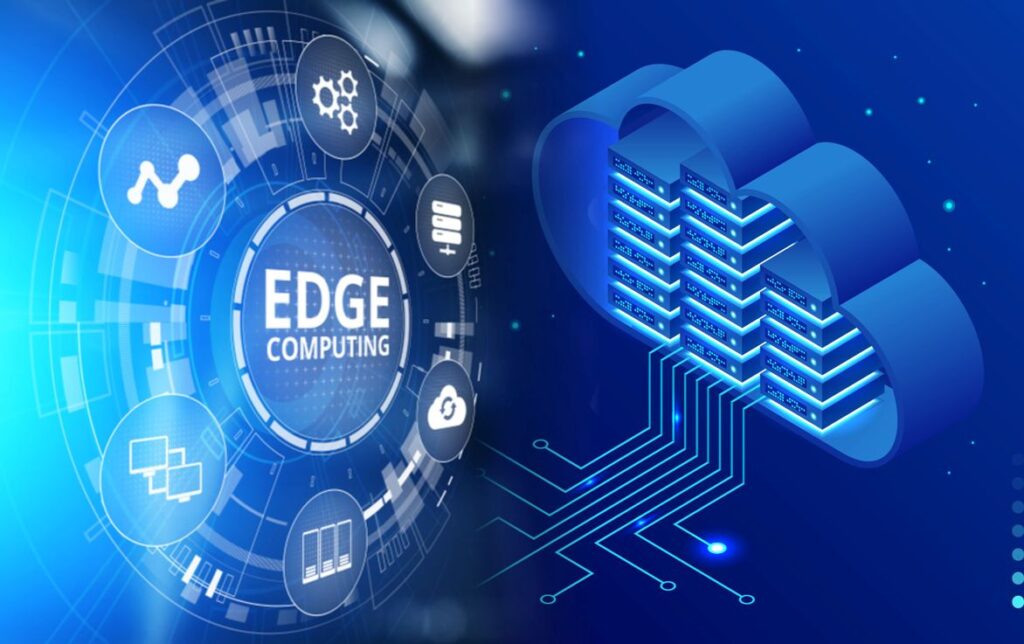
Edge computing is becoming increasingly important as businesses seek faster processing speeds and lower latency for connected devices. Instead of sending all data to centralized cloud servers, edge computing processes information closer to where it is generated.
This approach is especially valuable for applications that require immediate responses, including autonomous vehicles, industrial automation, healthcare monitoring, and smart manufacturing. Faster processing improves reliability while reducing dependence on constant internet connectivity.
Manufacturers use edge devices to monitor equipment performance in real time. Sensors detect unusual operating conditions and alert maintenance teams before equipment failures occur, reducing downtime and maintenance costs.
Retail businesses are also exploring edge computing to improve customer experiences. Smart checkout systems, inventory monitoring, and personalized digital displays can operate more efficiently when processing occurs locally.
Security is another advantage. Sensitive information can often remain within local networks instead of being transmitted across long distances, reducing exposure to certain cybersecurity risks. However, organizations must still maintain strong security practices for edge devices themselves.
Technology analysts expect edge computing to complement cloud services rather than replace them. Together, these technologies provide organizations with greater flexibility while supporting the growing number of connected devices worldwide.